
Cyberwave and the joyful plumbing of a cloud-connected lidar
Integrating a Waveshare D500 lidar with a UGV Beast through Cyberwave, ROS 2, and a digital twin workflow.
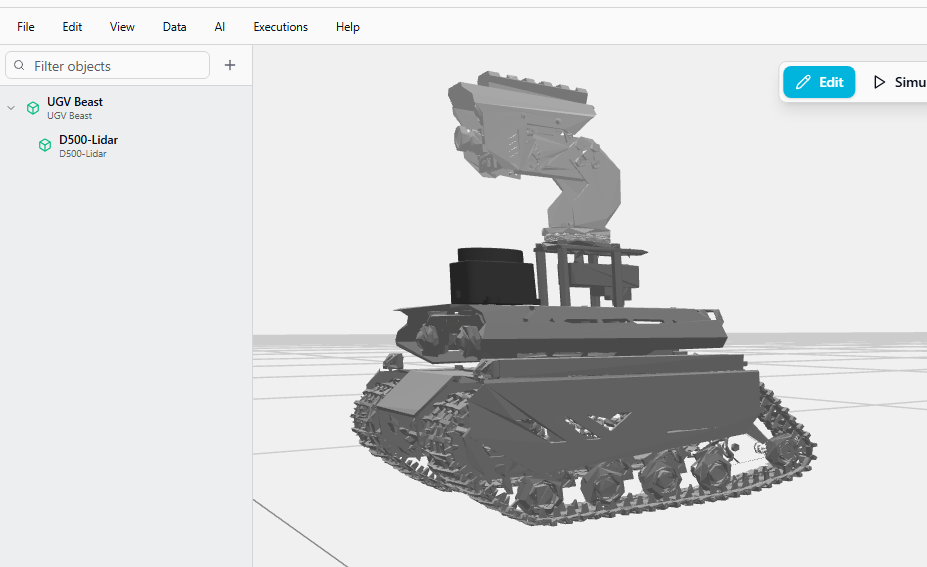
UGV with lidar in Cyberwave Digital Twin environment
I often think that many foundational parts of robotics are basically plumbing: piping data from A to B, keeping interfaces clean, and making sure the whole system still behaves once real hardware gets involved. That is a big part of why I have been enjoying working with Milan/Zürich company Cyberwave. Their architecture makes this sort of systems integration much less painful than it usually is.
As part of their Builder’s Cohort, they sent me a UGV Beast and said “make something”. So far, I have been setting up navigation and odometry through extended Kalman filters and the ROS 2 navigation stack, while wiring everything into the Cyberwave platform and its digital twin model.
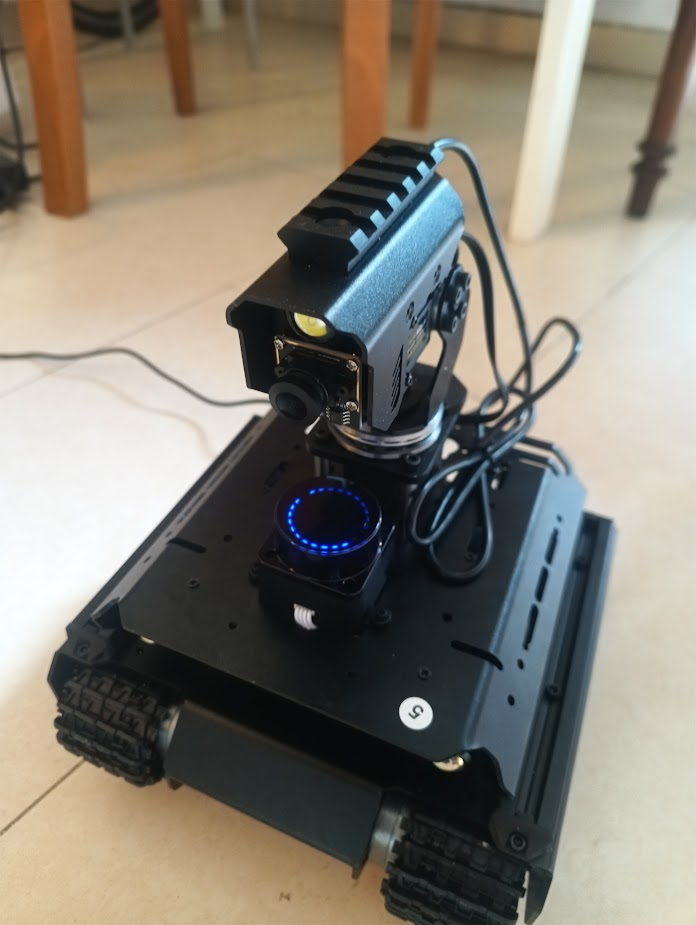
Real robot with lidar (such a pretty colour of blue!)
The most recent addition was a Waveshare D500 lidar / LDRobot LD19 kit. The physical UART connection was a little more dramatic than I would have liked, especially late in the evening, but the software side was refreshingly smooth. Using Cyberwave’s driver-skill pattern, I had a finished driver up, connected, and publishing through the Cyberwave cloud layer within about two hours.
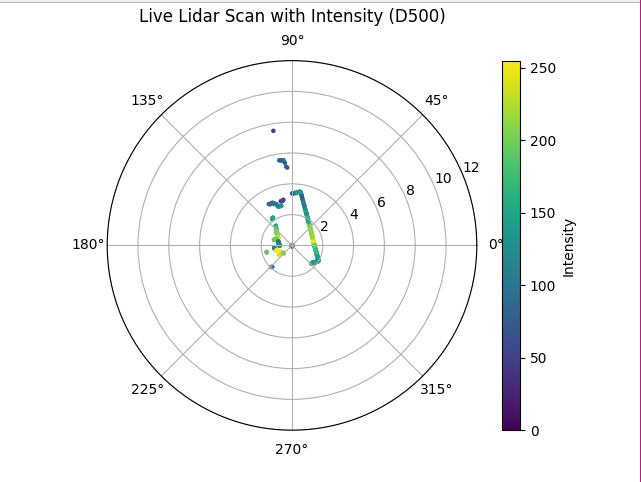
Lidar scan polar plot
That is the part I find most exciting: once the sensor is represented properly in the platform, it stops being a device tethered to one serial port on one robot. It becomes part of a cloud-connected system. I now have a digital twin of the sensor inside the wider robot model, can query it remotely, and can send summaries of the data into cloud-provisioned workflows, including experiments with Gemini Robotics ER.
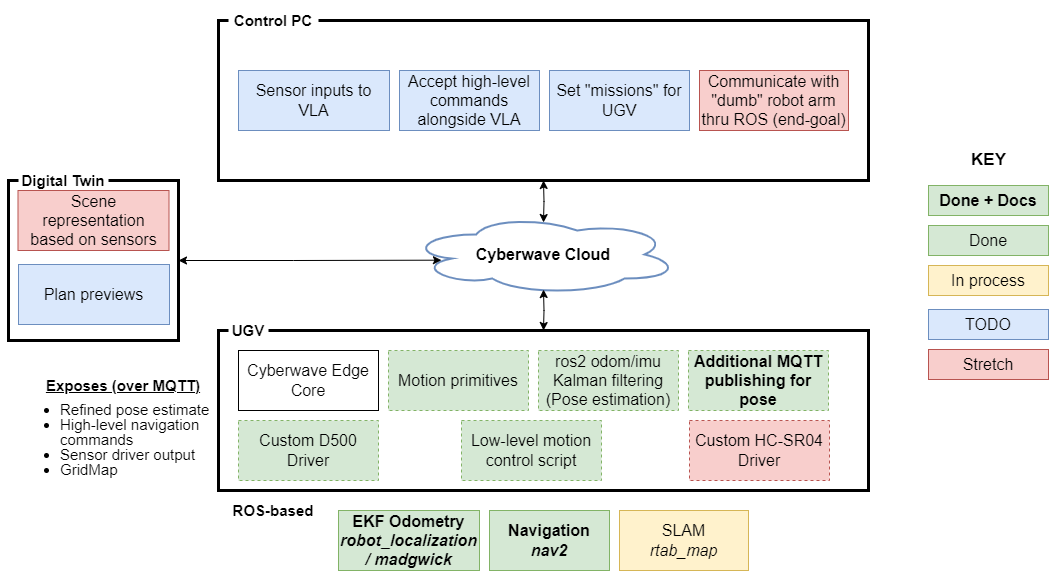
Action plan
I have been documenting the process in my live learning repository, including the ROS 2 integration work, EKF setup, and the step-by-step driver creation workflow:
The learning repository goes into much more detail on creating the driver, publishing LaserScan-style telemetry, and attaching the sensor into the Cyberwave catalogue and environment model. More updates to come once I push the navigation side further.
Live test
Update, September 2026: the UGV has since become the mobile scout in our heterogeneous robot team for assembly on cluttered sites.